

We’ve been told for decades that progress means mastering nature, outsmarting it, and building systems that override the natural world. But what if the real breakthrough isn’t in controlling nature—but in aligning with it?
This isn’t just a philosophical shift. It’s a practical one. And it’s reshaping how we think about food, health, resilience, and even the future of investment.
Let’s start with the chain of causality:
✅ Health is downstream from nutrient-dense food.
We can’t be truly healthy if what we eat lacks essential nutrients. Chronic disease, fatigue, and low immunity often trace back to nutritional gaps—not just in our diets, but in the soil where our food grows.
✅ Nutrient density is downstream from soil health.
Rich, living soil doesn’t just grow crops—it feeds them with a full spectrum of micronutrients. When soil is depleted—eroded, chemically treated, or lifeless—so are the plants, and so are we.
✅ Soil health is downstream from regenerative practices.
Cover cropping, composting, no-till farming, biodiversity—these aren’t just “eco-friendly” add-ons. They’re the foundation of a living system that heals itself, captures carbon, and builds resilience.
✅ Regenerative systems create resilient assets.
And here’s the shift: we’re not just growing food. We’re building systems—ones that are self-sustaining, climate-resilient, and scalable. These aren’t just farms. They’re living infrastructure.
The people coming to us aren’t just backyard gardeners or small-scale farmers. They’re from Silicon Valley and they’re asking the question:
How do we build food gardens that don’t create the problems we’re trying to solve?
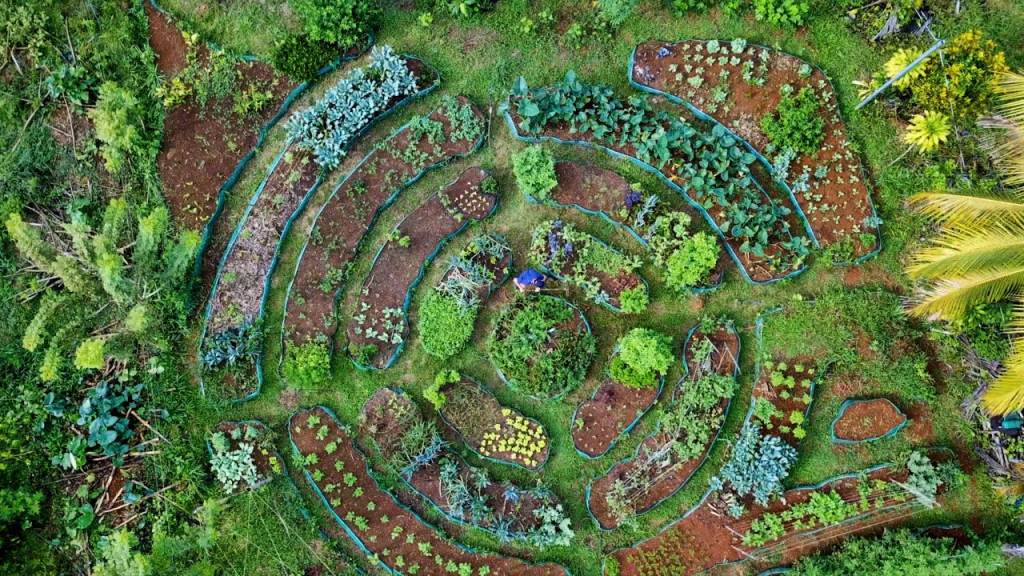
They’re tired of solutions that create new dependencies, new risks, or new layers of complexity. They want systems that work—not just function.
So, what’s the answer?
Stop competing with systems optimized over 4 billion years. Design with them instead.
We’re not trying to invent a new way to grow food. We’re trying to reconnect with the way life already works—through photosynthesis, nutrient cycling, microbial networks, and natural resilience.
At Climate Roots, we’re building the proof of concept with a new regenerative garden set to launch in 2026.
This isn’t just about growing food. It’s about creating a model—one that’s scalable, replicable, and deeply aligned with the rhythms of life.
It’s a system that doesn’t just reduce harm. It rebuilds.
It’s a system where health flows naturally from the soil, where resilience grows from biodiversity, and where every investment supports a living, regenerating planet.
We’re not just building a garden.
We’re building a blueprint.
And we’d love you to be part of it.
Stay tuned. The next chapter is being written—by the land, with us, and for the future.
 Climate Roots