
Author: Ananya Emma Malik
it depends almost entirely on how the greenhouse is heated and powered. Fossil-fuel-heated hydroponic tomatoes can carry a larger carbon footprint than field tomatoes. Powered by renewables, they can be among the lowest.
Why tomatoes are a tougher test than lettuce
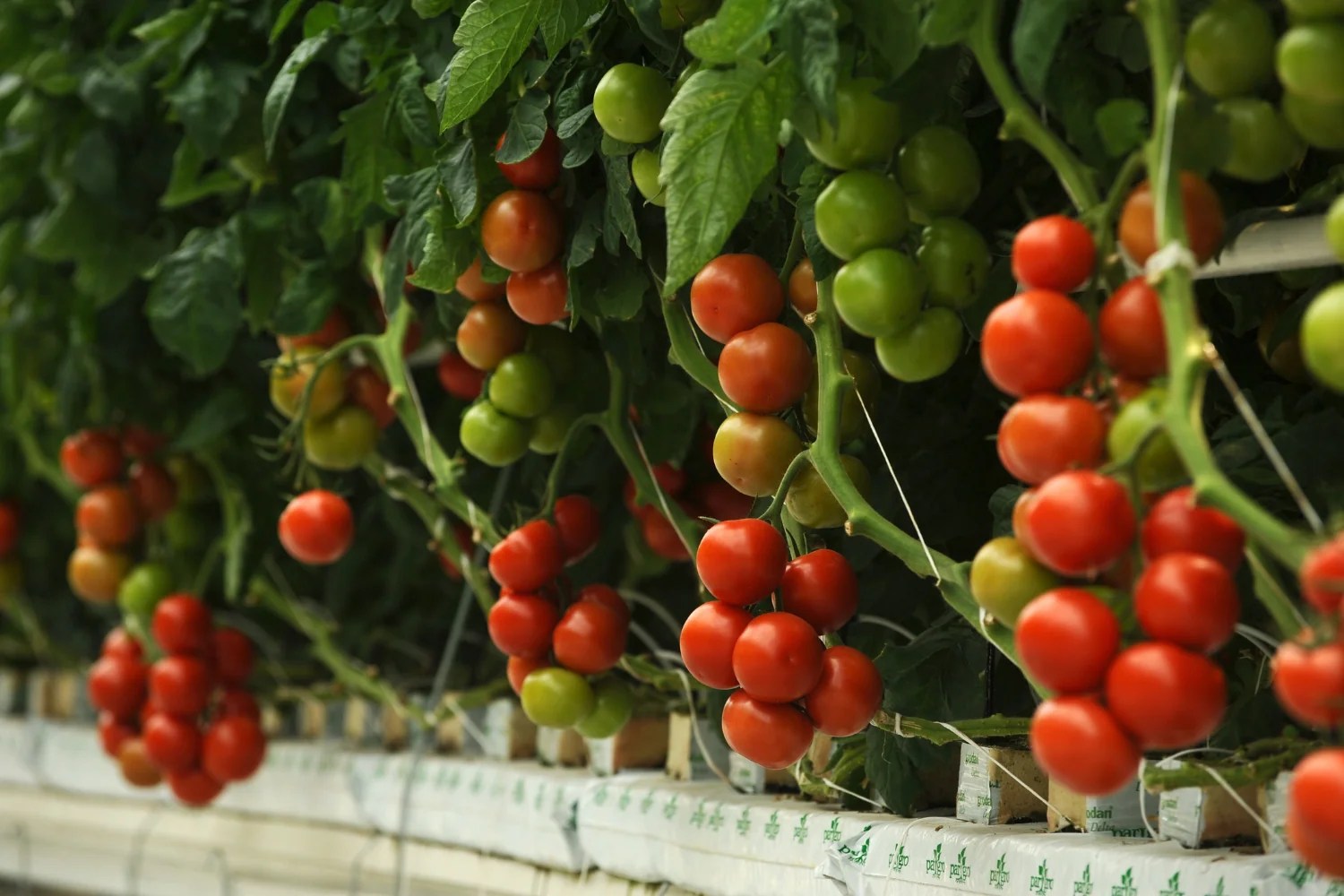
Lettuce grows fast and stays small. Tomatoes are long-season, heat-loving vines that need warmth for months to set fruit. In cooler climates or seasons, that means heating a greenhouse, and heating is where most of the environmental cost hides.
Comparing tomatoes fairly
Scientists use a life cycle assessment (LCA) to compare farming methods. It adds up every input, from building the greenhouse and making fertilizer to running pumps and heaters, and divides by the harvest. The result is usually expressed as kilograms of carbon dioxide (CO2) emitted per kilogram of tomatoes.
What the studies found
| Study | Setup | Carbon footprint | Biggest driver |
|---|---|---|---|
| Japan, 2024 | High-tech hydroponic greenhouse heated with propane gas | 3.67 kg CO2 per kg | Heating fuel: 55.6% of emissions |
| Northern Spain | Hydroponic greenhouse heated with waste biomass, solar-powered irrigation | 1.4 to 2.5 kg CO2e per kg | Fertilizer and greenhouse structure |
| Abu Dhabi, 2018 | Hydroponic vs. open-field vs. organic greenhouse | Hydroponic highest in most impact categories | Greenhouse structure (57%) and electricity (36%) |
Three lessons stand out:
- Energy source is the biggest lever. In the Japanese study, switching from gas to wood chips could cut emissions by up to about half, though the total still stayed above conventional farming.
- Clean energy changes the picture. The Spanish greenhouse, using a waste product for heat and solar for pumps, landed well below the gas-heated example.
- The building itself counts. Steel, glass, and plastic have their own footprint, which is why long-lasting structures and reused materials matter.
What soil-free tomatoes do well
Hydroponic greenhouses still use water and nutrients more efficiently, protect plants from extreme weather, and can produce fruit year-round close to where people live. In cold countries that import most of their winter tomatoes, a local greenhouse running on clean power can beat a tomato trucked or shipped thousands of miles.
The climate connection
This is the lesson for our Garden Rx mini-lesson on climate and food: “high-tech” does not automatically mean “green.” A summer tomato grown in a raised bed, in season, with sunlight as its only heater, is hard to beat. Greenhouse hydroponics earns its place when it fills gaps in season or location, and when its energy comes from the sun, wind, or waste.
The bottom line
Ask where a tomato’s heat comes from. Soil-free farming can be a climate win or a climate cost, and the energy source decides which.
Sources
- Life Cycle CO2 Emissions Analysis of a High-Tech Greenhouse Horticulture Utilizing Wood Chips for Heating in Japan, Taguchi et al., Sustainability, 2024
- Low Energy and Carbon Hydroponic Tomato Cultivation in Northern Spain, Martínez et al.
- Life Cycle Assessment of Conventional, Organic Green-House and Hydroponic Tomato Cultivation Systems in Abu Dhabi, UAE, Almarzooqi, 2018
- Life cycle assessment of tomato production for different production strategies, Journal of Cleaner Production (Norway)

