Author: Ananya Emma Malik
TLDR; yes, on water and land, often dramatically. The catch is energy. A hydroponic farm is only as sustainable as the power that runs its pumps, lights, and climate control.
What hydroponics is
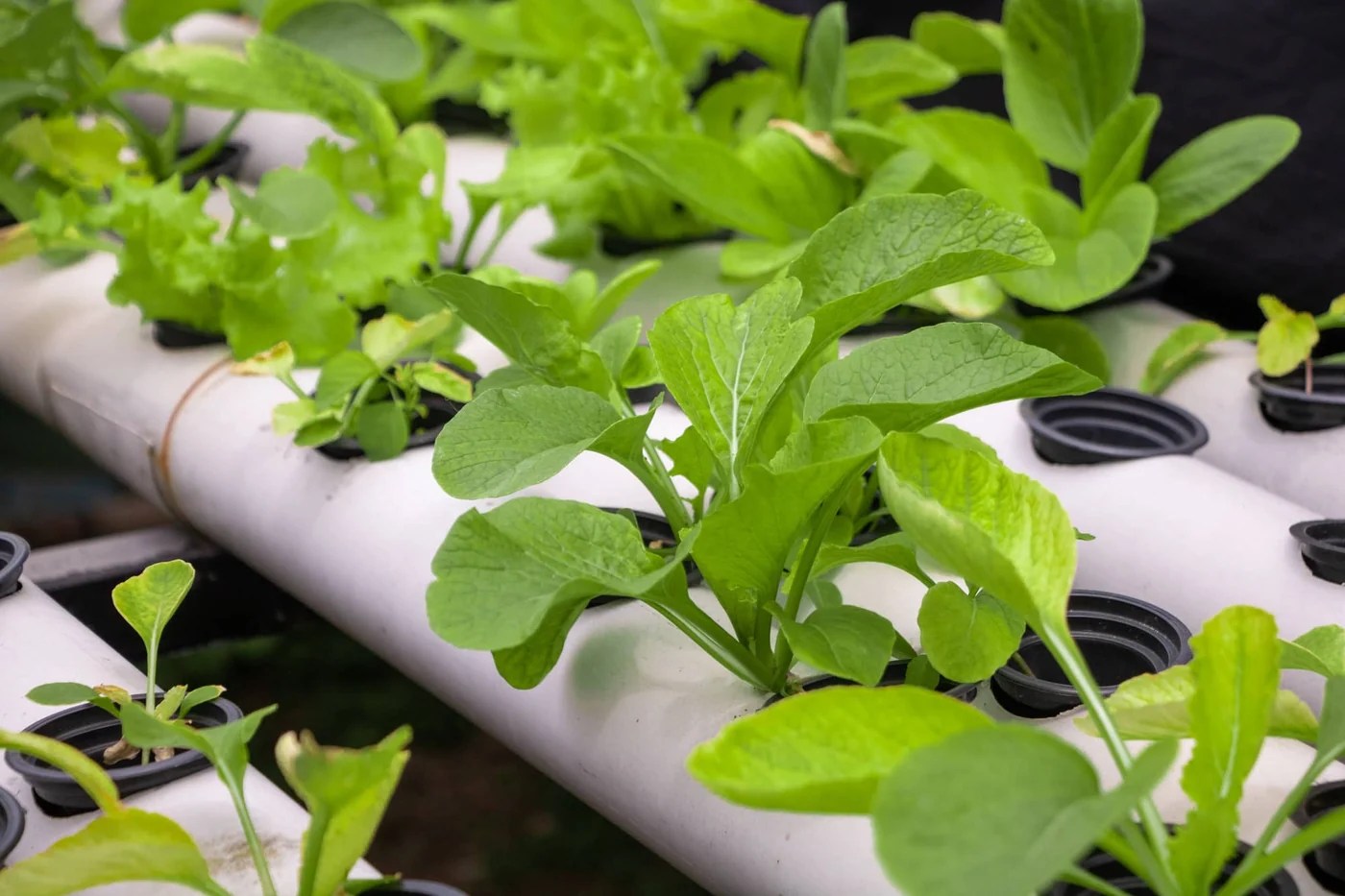
Hydroponics grows plants without soil. Roots sit in water carrying dissolved nutrients, and a pump keeps that water moving. Because the water is recirculated instead of soaking into the ground, very little is lost. Plants can also be stacked or packed closer together, so more food grows on less space.
Where hydroponics wins
- Water: a widely cited Arizona State University study of lettuce in Yuma, Arizona found hydroponics used roughly ten times less water than conventional field farming.
- Land: higher yields per square foot mean less farmland for the same harvest, which matters as cities grow and farmland shrinks.
- Fewer inputs leaking out: closed systems reuse nutrients rather than letting fertilizer run off into rivers.
- Food close to home: hydroponic farms can sit on rooftops, in warehouses, or next to schools, cutting the distance food travels.
Where it struggles
- Energy: the same Yuma study found hydroponics needed far more energy per head of lettuce, mostly for heating, cooling, and lighting. A 2023 review of the research reached the same conclusion: water and land savings, but higher energy demand.
- Cost and know-how: setup is expensive, and systems need regular monitoring. A pump failure can wipe out a crop in a day.
- Crop limits: leafy greens and herbs do best. Staple crops like wheat or potatoes are not practical.
The researchers’ conclusion is useful: hydroponics makes the most sense where water is scarce and clean energy, especially solar, is plentiful.
What we learned building one: Project StartDown
I saw these trade-offs firsthand through Project StartDown, a student-led greenhouse project run by the nonprofit Climate Roots. In the summer of 2022, a small team of high school students, including me, began designing and building a hydroponic greenhouse at the LEAF community garden.
We chose a geodesic dome because its triangles spread stress evenly, making it resilient to strong winds. We salvaged wood for the walls, wrapped the dome in plastic shrink wrap for insulation, and added an outdoor bed to grow alongside the hydroponic system. It did not always go to plan: our first shrink-wrap attempt failed, and winter winds in 2023 blew the roofs off several greenhouses in the garden, including ours.
In 2025, a new team took over and connected a solar panel and battery to power the pump, so the system could circulate water without drawing from the grid. That small change answers the biggest weakness in the research: hydroponics gets far more sustainable when the sun pays its energy bill.
The lesson that carried into Garden Rx: the most sustainable food system is not one technology. It is the right method for the place, built and maintained by people who care about it.
The bottom line
Hydroponic farms can grow more food with much less water and land. Whether they are truly greener depends on energy. Powered by renewables and placed where water is scarce, they are a strong tool for a hotter, more crowded planet.
Sources
- Project StartDown, Climate Roots
- PS #27: Greenhouse Revamp, Climate Roots, July 2025
- Comparison of Land, Water, and Energy Requirements of Lettuce Grown Using Hydroponic vs. Conventional Agricultural Methods, Barbosa et al., International Journal of Environmental Research and Public Health, 2015
- Environmental Feasibility of Hydroponic and Aquaponic Systems, MIT Terrascope
- A Review of Hydroponics and Conventional Agriculture Based on Energy and Water Consumption, Environmental Impact, and Land Use, Pomoni et al., 2023

