
Author: Ananya Emma Malik
TLDR; aloe gel on the skin may help minor burns and scrapes heal, and it is generally safe there. Swallowing aloe is a different story: the evidence is weak and some forms carry real risks.
The easiest medicinal plant to keep alive
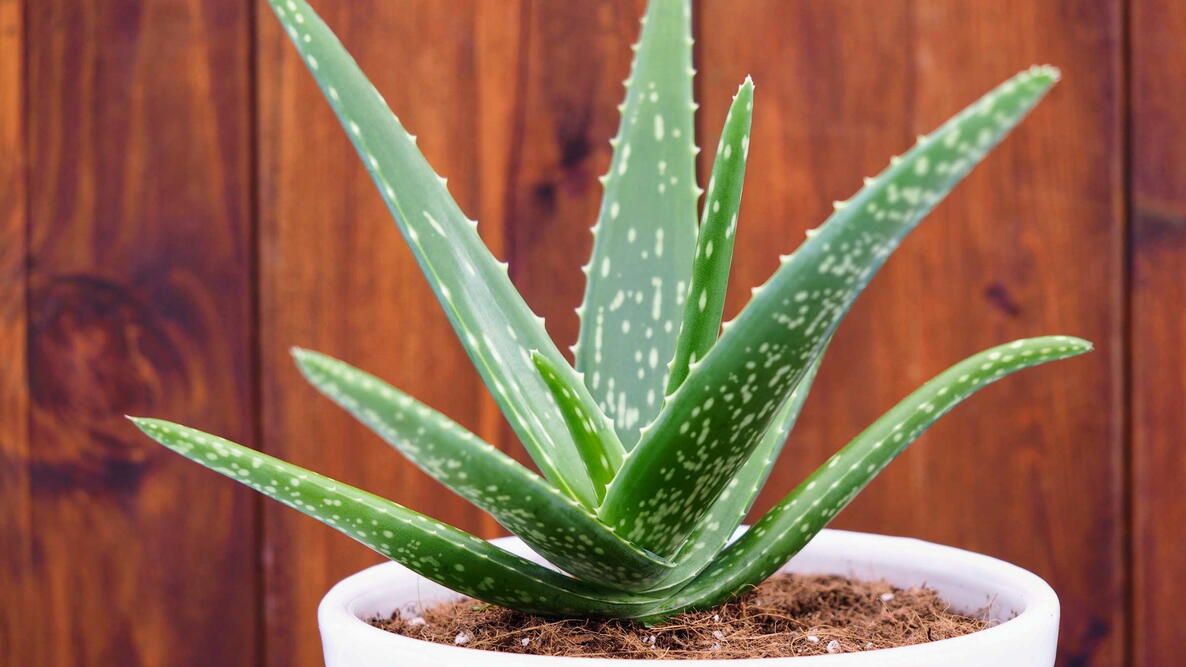
Aloe vera is a succulent that thrives on neglect: bright light, well-drained soil, and water only when the soil is dry. That makes it a perfect take-home plant for Garden Rx participants. Snap off a leaf, and the clear gel inside is the part most people use.
Two parts of one leaf
The distinction matters for safety.
- The gel: the clear, jelly-like center of the leaf. This is what goes into lotions and after-sun products.
- The latex: a thin yellow layer just under the skin of the leaf. It is a strong laxative and the source of most safety concerns.
What the evidence says
- Minor burns and scrapes: early studies suggest topical aloe gel may help them heal. It has not been shown to work better than standard wound care.
- Skin conditions: aloe has been studied for acne, psoriasis, and some mouth conditions, with limited evidence. It is not a replacement for standard treatment.
- Radiation skin damage: aloe gel has not been shown to prevent skin burns from radiation therapy.
- Drinking aloe: evidence for oral aloe benefits is limited. NIH’s NCCIH says short-term use of oral aloe gel, up to 42 days, appears safe in studies, but there is no strong case for taking it.
The safety story
- Aloe latex can cause cramps and diarrhea. In 2002 the FDA removed aloe from over-the-counter laxatives because manufacturers did not provide safety data.
- Whole-leaf extract: a two-year U.S. National Toxicology Program study found that a non-decolorized whole-leaf aloe extract caused intestinal tumors in rats. Most consumer products are not this form, but it is a reason to be cautious with aloe drinks.
- Medication concerns: oral aloe may lower blood sugar and its laxative effect can reduce how well other medicines are absorbed. This matters for older adults managing several prescriptions.
- On the skin: aloe is generally well tolerated, though some people get irritation or an allergic reaction.
The bottom line
Keep an aloe plant on the windowsill, and use the gel on a small kitchen burn or sunburn if it feels soothing. Skip aloe juices and supplements unless your doctor recommends them, and see a professional for any serious burn.
Sources
- Aloe Vera: Usefulness and Safety, NIH NCCIH
- Aloe Vera, Center for Science in the Public Interest
- Did you know? About aloe vera, summarizing NIH MedlinePlus guidance

