PS #3: Dome Design

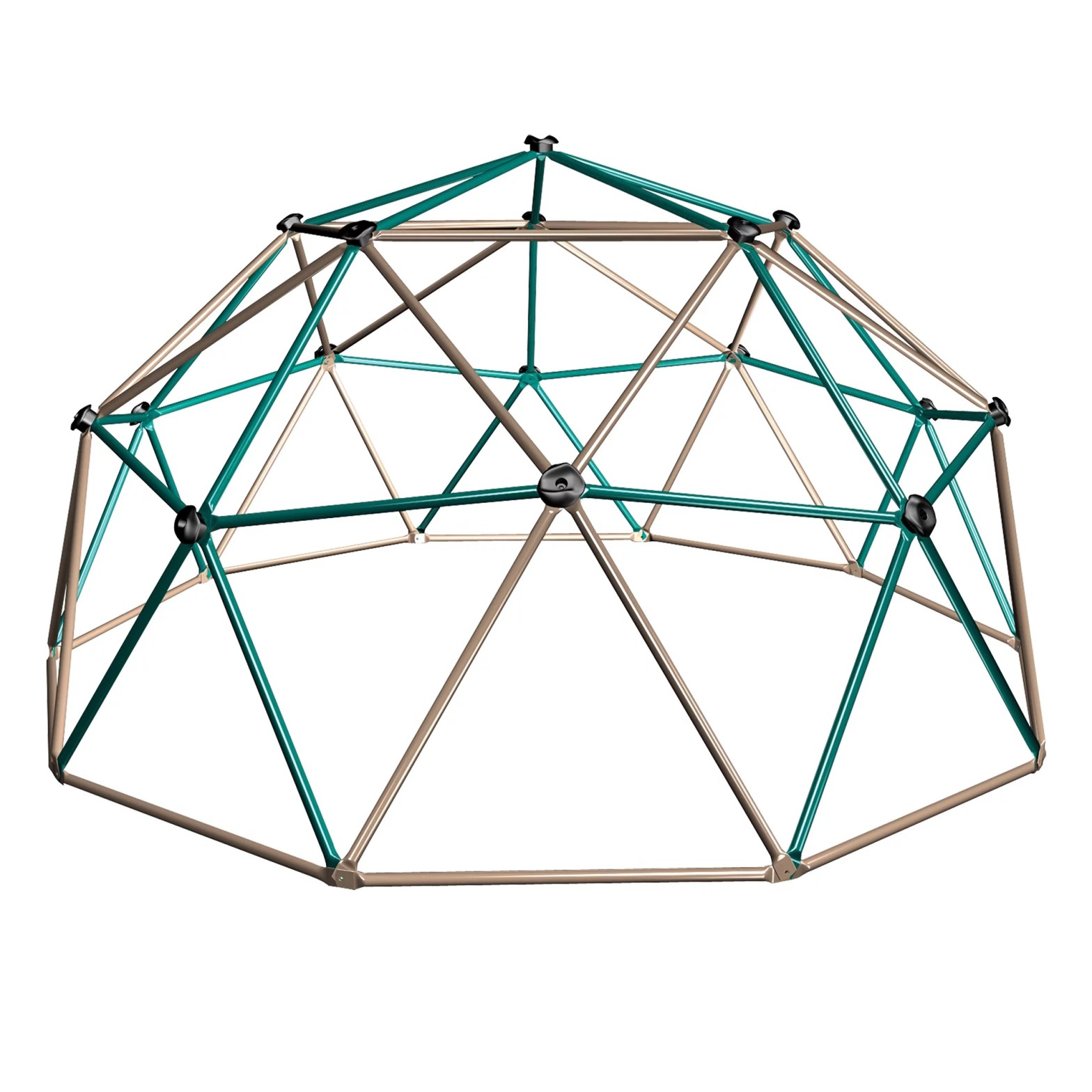
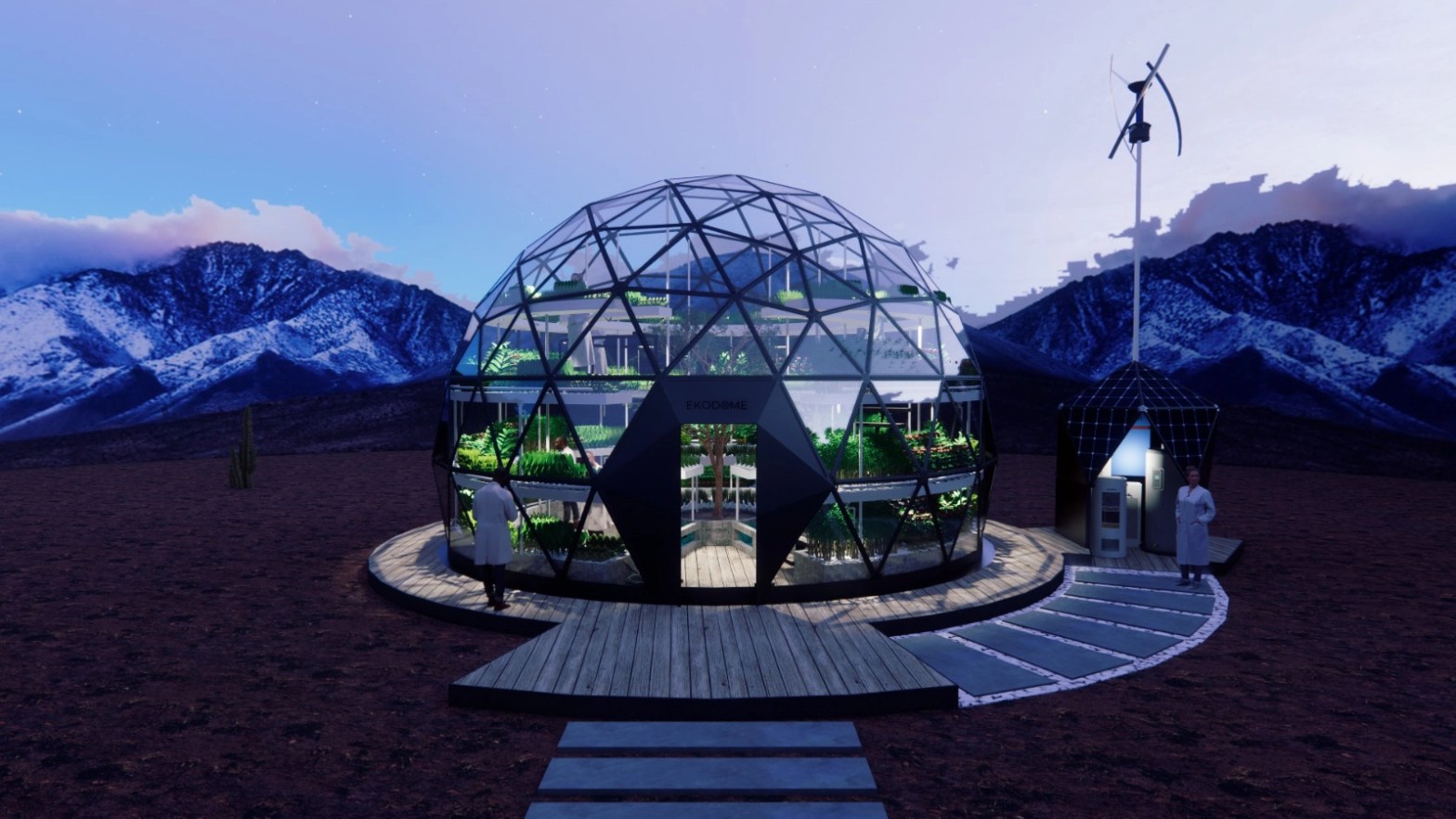
From the countless designs stores like Walmart and Target offered for the dome, the geodesic shape stuck out like a sore thumb. One reason is its resilience. The triangular components of the dome distribute stress evenly across the structure, making it incredibly resilient against external forces such as strong winds that could be harmful during a heavy storm. Next, geodesic domes are extremely space efficient. Geodesic domes provide a high volume-to-surface area ratio, which means it provides more usable space inside with less building material. Finally, geodesic domes are energy efficient. The shape of the dome allows for optimal temperature regulation. Warm air rises to the top and circulates down the curved walls, maintaining a consistent internal climate. This natural convection reduces the need for artificial heating and cooling, leading to significant energy savings. Thus, the geodesic dome was the best pick, due to its efficiency in saving energy and its strength against external forces.

Keep calm and keep growing!

PS #2: The First Day

Waking up at 7:00 am sharp was a jarring change to what my sleep schedule used to be when summer started. When I arrived at the farm, we got straight to work making the base for the greenhouse. Even though it was the first day, there were a lot of tasks to be completed. Due to this, we needed to get more people for help. We recruited a team of student volunteers to help us finish the work. We split up into teams, one building the dome, the second hauling mulch from the field to the plot, and the third disassembling planter boxes to make a base for the dome to stand on.

I was placed into the team wheeling the mulch back to the plot. It was tenuous work, but it gave us a lot of experience in working in a team. For example, the wheelbarrow carrying the mulch used to get stuck in the ground due to it being uneven and rocky. We overcame this by making one person push the wheelbarrow while the other constantly shovels in front of the front wheel to allow the wheelbarrow to move smoothly. When the day was complete, we had the dome, enough wood to be used for the inner wall, and the plot ready to grow plants.

Keep calm and keep growing!

PS #1: Designing the Greenhouse

Planning the greenhouse was not going to be a simple task. Every single measurement has to be precise and accurate to make sure the entire structure is symmetrical and looks neat. Everyone submitted their own design on how the greenhouse should look.

However one of the most important parts was figuring out how many plants could fit inside each PVC pipe. Each person in the team was tasked on making a design on where the hydroponics and pipes should go inside the greenhouse, and we had to calculate how many plants we could fit inside of the hydroponic system.

Keep calm and keep growing!

PS #0: Hello World!

My name is Arin Thakkar, and I’m a sophomore in high school with an interest in artificial intelligence and applied mathematics. I love playing the guitar and diving into science fiction books in my free time. My friend Kenric, also a sophomore, shares my passion for mathematics. He’s an avid reader who can be found absorbed in anything from fiction to calculus.

Together, we are working together to solve an important problem in our community: food and nutritional insecurity.

The region of the East Bay where we live, has a total population of just over 600,000 people. Based on data from the TCV Food Bank in the tri-city area, 2% of this population is food insecure implying that 13,000 number of people do not know where their next meal is going to come from. 2% might seem insignificant, but the number is staggering when put in context of the amount of wealth in the Bay Area. How could one of the wealthiest populations of the world with one of the highest median incomes in the country, not feed its people? This is the question that drove us to build a greenhouse that would feed our community.

With both Kenric and I interested in mathematics and computer science (CS), we wanted to find a solution that helps us improve food production through math and CS. We have decided to build an automated greenhouse that keeps the plants healthy with minimal manual labor.

Our goal is to create a greenhouse that is cost-effective, easy to maintain, a produces a lot of food!

In this series of blogs, we will post updates of our work of our greenhouse. I hope you feel inspired from this project, and begin your own journey on helping your community!

Table of Contents
PS #1: Designing The Greenhouse
PS #2: The First Day
PS #3: Dome Design
PS #4: Building The Inner Wall
PS #5: Upgrading the Inner Wall
PS #6: Dome Disaster
PS #7: Getting Back on Track
PS #8: Theory Behind Wall Shape
PS #9: Completing the Main Structure
PS #10: Upgrading The Greenhouse
PS #11: Completed Hydroponics
PS #12: Hydroponics Explained
PS #13: Mini Hydroponics
PS #14: AWCD Interviews
PS #15: How Much Food can the Hydroponics System Grow?
PS #16: Wrapping the Greenhouse
PS #17: Wrapping the Greenhouse Pt. 2
PS #18: Extended Break
PS #19:
PS #20:
PS #21:
PS #22: Reinforcing the Greenhouse Walls
PS #23: Which Plant is Best for Our Hydroponics System?
PS #24: How can We Utilize Our Outside Bed?
PS #25: Brick and Order

Keep calm and keep growing!